 11 min read


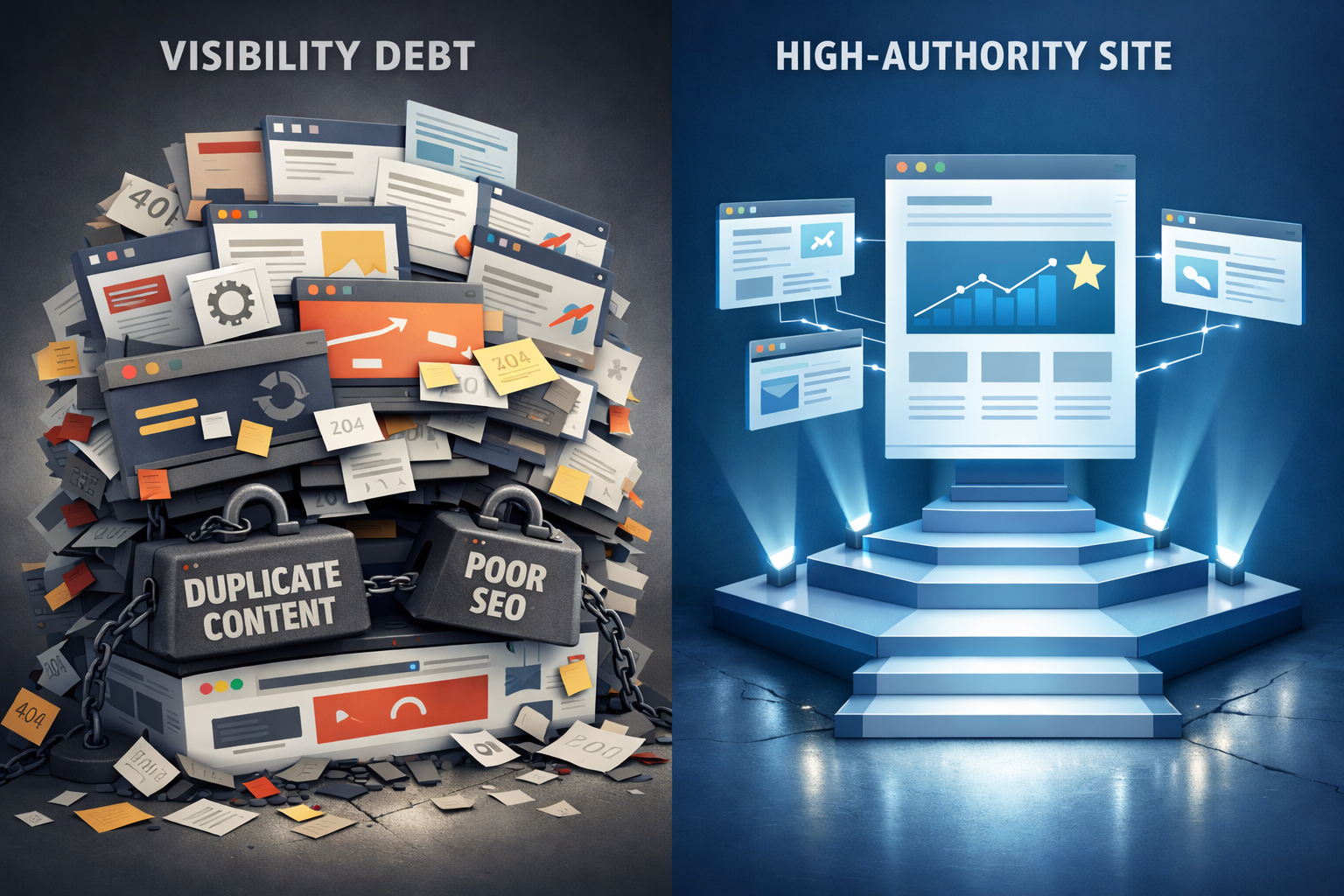
Publishing web content regularly is one of the most effective ways to build online visibility. But if you’ve been doing it for years, it may not be the asset you think it is. More content doesn’t translate into more authority or visits. In fact, volume can dilute the impact of even your best content over time.
The key issue is cannibalization. Overlapping articles, outdated pages, and jumbled content clusters fragment the signals your brand sends to search engines and AI systems. These become liabilities, making it harder for any single page to earn the visibility it deserves.
Visibility debt is the accumulated cost of content you never consolidated, restructured, or retired. If your brand publishes regularly but doesn’t have an ongoing system for managing your back catalog, this debt builds quietly in the background. And you might not notice until growth stalls.
The fix is content consolidation: the deliberate process of auditing, merging, and restructuring pages so authority compounds rather than fractures.
What Visibility Debt Is
Visibility debt is when content accumulates without any clear system for governing it. As your library grows, topics blur together. Pages start competing with one another instead of reinforcing a clear hierarchy.
You might have visibility debt if your backlog of published content:
- Overlaps in topic and theme
- Competes with other content on your site, especially with linking
- Confuses search and AI systems with inconsistent naming or positioning
To rank for a high-intent SEO keyword in their industries, many organizations publish several blogs targeting it each year. This keeps the content fresh and relevant, but it also creates a situation where multiple pages start to look similar.
That’s problematic. Search engines and AI systems try to determine which page on your site is the definitive answer for any given topic. If the signals you send to Google and LLMs are fragmented or duplicated, these systems will prioritize content from other brands.
The issue isn’t technical debt, since pages still load quickly and metadata remains accurate and in place. Instead, visibility debt dilutes your authority.
But you can solve the issue by developing the right approach to content management.
The 4 Types of Visibility Debt
To fix visibility debt, you first need to understand the specific layers in which it accumulates. Here’s a closer look at the problems your content management strategy will need to address:
1. Content Debt
Duplicate and overlapping topics dilute your traffic and authority, even when written years apart and from slightly different angles.
This leads to thematic drift, which confuses search engines by making them question which page they should consider your site’s top resource on the subject.
That makes them more likely to choose competing pages over your own.
2. Structural Debt
Some visibility debt is structural. Search engines and AI can’t tell which pages are primary and which are supporting — typically because your site’s architecture hasn’t signaled the distinction enough.
Issues with internal linking also create structural debt. For example, you might not have your pillar page for a topic linked broadly enough across your blog. Or you may have old links in content published years ago that no longer point to active pages.
3. Link Debt
Scattered backlinks are the major issue to watch here. When you have similar content across multiple URLs, any external links you earn will be distributed broadly.
Instead, you want all those valuable “votes” for your content to direct to a single high-value pillar page for each topic.
Backlinks can be difficult to earn, making this one of the most expensive forms of visibility debt to carry.
4. Entity Debt
Entity debt refers to how outdated content dilutes your brand’s digital impact.
Older blogs might have positioned your company around different value propositions. Search engines notice this and view it as your brand having unclear positioning. That makes them less likely to surface you as a topical authority in the future.
The fix here is updating your old content to better reflect your brand’s current position, covered below.
How Visibility Debt Hurts Performance
Visibility debt won’t reduce your traffic overnight, but it often caps performance below your team’s true potential through issues like:
- Keyword cannibalization
- Split backlink equity
- Weak authority signals
- Confused AI and search outputs
These aren’t the most common metrics that marketing teams track, so it’s easy to miss the issue. But they accumulate quietly in the background and show up as stagnation — even if new content continues to improve. The main way visibility debt impacts performance is by causing it to flatline even as your team does great new work.
Why Most Teams Keep Creating More Debt
One of the first steps in resolving visibility debt is to make sure you’re not creating more of it through policy and process.
Marketers often gauge performance using output-based KPIs such as posts per month.
But a “more content” mindset that prioritizes posting more without the right strategy to inform the content will only make things worse.
When growth stalls, you may naturally look to publish more in a push for progress. Auditing old content feels like maintenance work that won’t actually contribute to the KPIs your team is aiming to hit in the near term.
Worse, you may not have the right ownership in place. For example, writers draft your content, editors review it, and a publisher publishes it. But is anyone responsible for maintaining the library as a whole? If not, pages stay live indefinitely, eventually becoming debt.
The result is a content operation structurally designed, however unintentionally, to accumulate debt. Every quarter adds more pages, and the drag on performance goes unnoticed until someone finally asks why growth has flatlined.
The Visibility Debt Audit
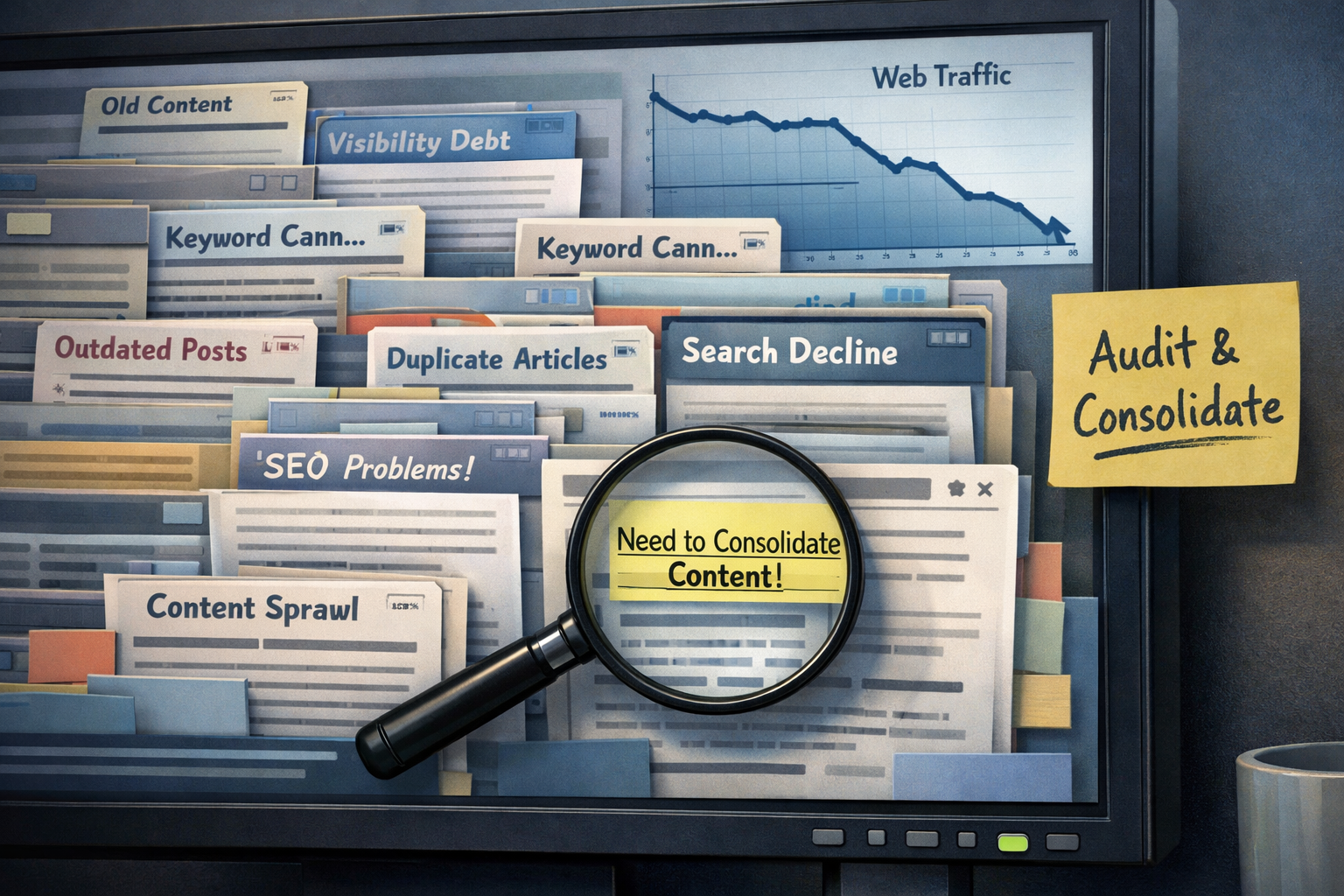
Before you consolidate content, you need the full picture of how pages interact to affect performance. A visibility debt audit provides the information you need to make sure your content isn’t competing with itself.
The process typically looks like this:
- Map overlapping pages: Group your content by topic cluster instead of date or category.
- Flag underperforming duplicates: Within each cluster, look for pages pulling minimal traffic or backlinks compared to other content covering similar ground.
- Find misaligned content: Look for pages that are poor reflections of your current positioning, product, or messaging. Remove or edit pages with these issues to avoid accumulating entity debt.
The key is focusing on clusters, not individual pages. When fixing visibility debt, what matters is the amount of overlap you have within SEO categories. Focusing on individual pages doesn’t always provide the contextual and comparative data you need to solve this.
The Decision Framework
Once you’ve reviewed your pages, the final step is deciding what to do with each of them. In a visibility debt audit, you have four choices: keep, merge, redirect, or remove.
Keep
If you’re going to keep a page, it should be the strongest asset in its cluster or provide a unique slant on a topic not covered elsewhere.
For example, in a cluster targeting the keyword “payroll software,” you’d want to keep your top-performing page overall. But you may also want to keep pages that cover it from a particular angle, such as “best payroll software for startups” or “best free payroll software.”
Keep decisions should be relatively rare. The purpose of the audit is to force prioritization, leaving you with a single, high-performing piece of content for any topic you target.
Merge
You should merge two pages when they cover the same topic well, but neither is clearly dominant. This means combining the best elements of each piece, including copy, data, structure, and backlinks.
Make sure the merged page retains the top-performing URL with the strongest existing authority.
Before publishing, do a final pass to make sure you’re not leaving anything essential out of the newly merged document. It’s easy to leave a heading behind and miss a critical search angle.
If you forgot to merge a heading about “running shoe materials,” your final “best running shoes” page would miss out on people searching for this information as part of their path to purchase.
Redirect
If a page has accumulated backlinks or still pulls residual traffic, consider redirecting the URL. A 301 redirect passes search engines and searchers to the right destination without losing the equity you’ve built on the page.
Redirects are especially useful for resolving link debt. It essentially helps you maintain the value of your existing links and organic traffic, without taking anything away from your top piece of content in the cluster.
Remove
Finally, remove pages that add no clear value. These may have:
- No meaningful traffic
- No backlinks worth preserving
- No relevance to your current strategy
This option is only appropriate for pages that have no unique value to transfer elsewhere on your site. If there’s any content to preserve, merge it into another page in the cluster. If there’s any backlink authority remaining, redirect instead.
The Power of Content Consolidation
Consolidation is where much of the value lies in content audits. You may have published many articles covering a topic over the years, but removing some can actually increase visibility.
Ten pages split authority across a topic cluster and send a weak signal to LLMs and search engines.
It’s better to consolidate all of that relevance, linking, and depth into a single asset. This positions your content on any given topic to be the best possible resource for as many relevant searches as possible.
This is where the biggest gains come from. When you design clusters around a single “hero” page, rankings can climb much faster than publishing more net-new content around the same ideas.
What Happens After Cleanup
Don’t worry if you can’t see the results of your work immediately after your cleanup. Traffic may dip briefly as search engines crawl your site and re-evaluate the changes you’ve made. This is a temporary process that should solve itself over time.
In the weeks and months that follow, you can look forward to:
- Stabilized rankings: Pages will stop competing with one another, and your stronger consolidated pages will gain visibility with clearer authority signals.
- Sharpened search and AI signals: When you have less noise in your content library, systems can map your site’s expertise more accurately. That means placements in results and AI answers that are more directly relevant to your business.
- Strengthened conversion paths: Fewer pages mean less fragmentation in the user’s journey. Visitors will land on the right page initially, rather than having to find it themselves.
A visibility debt audit and targeted fixes lead to compounding benefits. Consolidation goes beyond fixing the broken to create the conditions your new content needs to perform better. Every new page you create moving forward will connect back to a cleaner, more authoritative content ecosystem.
Common Mistakes
As you work, keep an eye out for the following mistakes, which can leave value on the table:
- Deleting instead of consolidating: Removal is the right choice for dead pages, but many teams jump to deletion when a merge or redirect could have saved what’s left of a page’s lingering authority.
- Ignoring redirects: Without redirects, old URLs still exist on your site as dead ends. They may even return 404 errors to users and crawling bots, which can erode trust and authority signals.
- Not updating internal links: Redirects handle external traffic and backlinks, but you may need to update internal links manually. Pointing to old URLs creates unnecessary redirect chains, which tell crawlers that your site is out of date.
- Stopping too early: Visibility debt re-accumulates every time you publish new content without a system governing how it fits into the existing library. The audit-and-consolidate cycle should recur regularly.
Unlocking Your Hidden Visibility
Most content teams already have strong production cadences in place. But you could leave visibility on the table if you don’t have a system to manage the library as a whole. Consolidating similar pages, redirecting where appropriate, and deleting when necessary can help your content perform better.
Visibility is often unlocked, rather than built. That means it could be worth spending some of your budget on building and running a content consolidation strategy. You’ll get less new material today, but you should see meaningfully improved performance over time.
If you’d like to move faster and with more direction, partner with Idea Grove. We specialize in building brand visibility and can help you accomplish more with the content you have today. Reach out to learn how we can help with brand strategy and full-funnel content marketing.

 5 min read