 11 min read



Too many search engine optimization (SEO) teams treat internal linking as an afterthought. The problem isn't expertise or effort. These teams know that interlinks improve site structure and crawlability while creating topical links between pages.
The trouble is the approach. If you don't consider authority as a big-picture concept, you'll default to small-scale, topic-based linking. Each content piece links to related articles, posts, or pages, but there's no internal linking strategy behind those connections. This scattershot approach can create authority, but one that's unfocused.
It's like playing a carnival game blindfolded. Some rings might reach the 100-point peg, but you're more likely to hit the 10-pointers, or nothing at all. What you want to do is aim directly for the high-value targets. In this case, those are the pages with the greatest revenue potential, and your links should funnel visitors (and search engine crawlers) to them.
The Hidden Problem: Authority Without Direction
A less-focused approach to topic authority is understandable. After all, every credible and valuable page generates authority signals. Content conveys topic expertise. PR pieces convey expertise and attract high-quality backlinks. Linking them benefits SEO by drawing traffic and attention to each page.
But it doesn't do as much as it could.
When links point inconsistently, your site doesn't funnel users or search engine crawlers to the pages that matter. Blog posts fail to deliver optimal return on investment (ROI) because they don't support the site's core pages.
Without an internal linking strategy supporting those revenue-generating pages, your site's home page becomes the default destination. Users and crawlers lack a clear map of the pages that matter, so they naturally choose to focus on the main page.
Sites like these have strong trust signals but weak outcomes. They demonstrate experience, expertise, authority, and trustworthiness — Google's core metrics for site authority, E-E-A-T — but crawlers don't know what to do with those signals. They can't point users to conversion-focused pages, so there's minimal benefit to the bottom line.
To restore a profitable traffic flow and improve ROI, you need to embrace authority engineering.
What "Authority Engineering" Actually Means
Authority engineering is the strategic building of site credibility, accomplished through purposeful linking. It's similar to a backlink-generation strategy, but earning authority from the outside is only part of the picture.
Yes, external validation is a crucial part of authority-building. But once your site earns that authority, it needs to deliberately funnel that authority internally. The lack of that internal routing is what scatters your site authority.
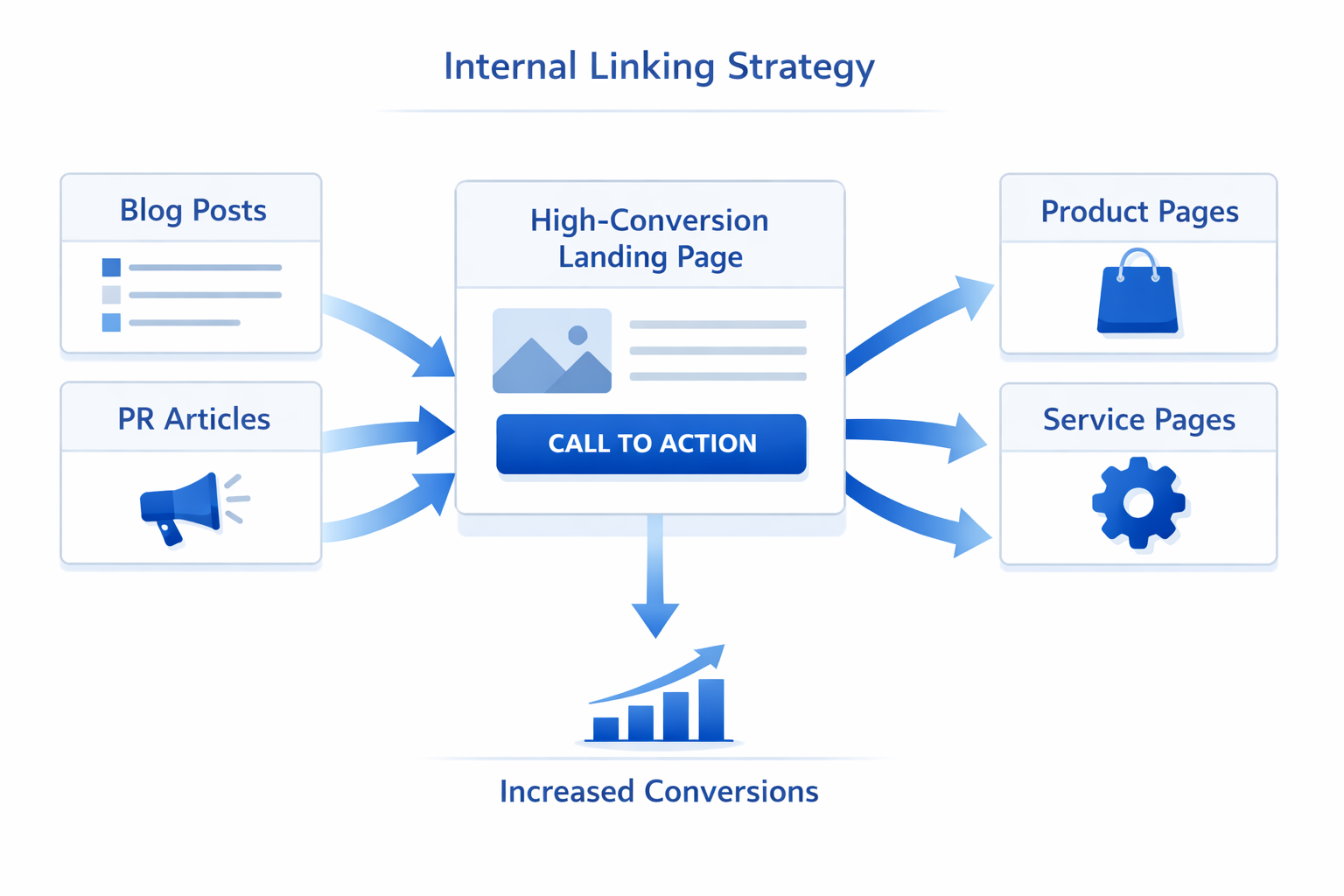
An effective authority engineering strategy avoids the scattering effect by connecting two types of content:
- Authority generators: Content assets that increase credibility and attract discerning audiences. Blog posts, PR coverage, educational resources, and customer testimonials all fit into this category.
- Authority destinations: Priority pages that encourage conversions and drive revenue. Examples include lead generation, product category, and content pillar pages.
Authority engineering links authority generators to relevant destinations, creating an actionable map that maximizes credibility.
The Priority Page Model
All of your content has value, but not all pages are equally impactful. You want to focus authority-building efforts on the pages that drive the most conversions. For most sites, those are the pages that serve high-intent visitors.
Solution and service pages typically attract customers at the bottom of the funnel and feature conversion-focused calls to action (CTAs). An internal linking structure should channel authority to these pages and bring them to the top of search results.
Idea Grove helps drive traffic to conversion-focused pages with trust-centered web design and content marketing. We build content and navigational pathways that build credibility at every stage, creating an effective funnel to your high-priority pages.
It's important to leverage external trust signals and internal linking strategies to spotlight pages that are key to your business model. With vision-aligned design and ongoing strategic optimization, we ensure that every new addition supports your high-intent web pages.
The 5 Rules of Internal Linking in a Visibility System
A visibility-focused SEO system is only possible with a top-down, end-to-end strategy. Step back and look at the whole picture, including every piece of content, and create an intentional map to priority pages.
1. Link Every New Content Asset to a Priority Page
Consistency strengthens your authority engineering approach. As soon as you've identified your priority pages, map them to your content calendar and ensure each outline supports at least one.
To avoid your authority engineering process becoming scattered, keep a record of which content links to each priority page. As you develop your content strategy, consider matching second- and third-degree connections as well.
2. Reinforce Positioning With Specific Anchor Text
Your anchor text communicates each link's context and purpose. It should be two to five words long and describe the target page in context.
Since you'll be linking multiple pages to each priority page, aim to vary your anchor text across each use. Variety helps your internal links avoid appearing spammy and provides more information about your site hierarchy to Google's crawlers.
Differentiating your anchor text also highlights the connection between the linking page and the destination, which is helpful to both crawlers and human readers.
3. Ensure Priority Pages Are 2–3 Links Away From Anywhere
Your priority pages are the center of your navigation strategy. You want to make them as easy to find as possible, which means minimizing the number of clicks required to reach them.
Like most aspects of your authority engineering process, this requires a top-down approach. Review your content map and check that all pages, including past blog posts, are no more than three links away from your identified priority pages.
Create a list of pages that don't pass this test. Some are easy to fix with a link to a priority page or, slightly less ideal, a link to a page that already has a priority page link. Others will take more strategizing.
If your site is more than a few years old, you might have a significant number of pages that are four or more clicks from a priority page. This is a good opportunity to cull your under-performing content.
4. Retrofit Older High-Performing Content
If older content is driving significant traffic or conversions, it's worth integrating it into your new strategy. This process is highly efficient and can immediately boost your priority page authority.
5. Prioritize Consistency Over Creativity
While variety matters in keyword planning, Google's crawlers depend on high-level consistency to understand your site map. One of the most valuable steps you can take is to organize your content into clusters that indicate your areas of expertise. Within those clusters, internal links should direct traffic between subtopics in a logical flow.
Writing Content With a Destination in Mind
Underperforming SEO teams create content for its own sake. Authority engineering shifts that mindset so that every content piece has a purpose.
Instead of "write a blog post," the objective is to "support a page." That adjustment immediately raises key questions, such as:
- What page are we supporting?
- How are we driving authority to that page?
- What credibility value is the new content adding?
The answers have a significant impact on briefs for content creators. The blog writer isn't just trying to rank for certain long-tail keyword searches or earn backlinks from leading industry sites. They're driving traffic and algorithms to the main site's solution page.
Likewise, your PR team is doing more than drawing attention to a specific event. They're directing the reader's focus and encouraging traffic to a category page.
Retrofitting Existing Content
Most authority gains come from existing content. Those pages already have trust signals, such as backlinks and crawl history, that new content has to build from scratch. When you integrate that existing content into your authority engineering strategy, you benefit from those signals immediately. The process requires three simple steps:
- Identify top traffic-earning pages.
- Map high-traffic pages to priority pages.
- Introduce contextual links.
End-to-end, retrofitting your content backlog requires less investment than creating new content.
Common Mistakes That Kill Authority Flow
As you examine your existing pages and links, tweak anchor text, and build a linking strategy that funnels traffic to your high-conversion pages, watch out for these common mistakes that can disrupt the flow of authority across your site.
"Related Posts" Widgets That Don't Support Revenue Pages
Haphazard "related post" widgets are a clear example of scattered page authority. An individual user may click on a related post that interests them, and that page may ultimately lead to a purchase. Unfortunately, each of those links pulls topic authority further away from revenue pages.
Think of these unwanted destinations as mandatory secondary destinations on a GPS route, and search algorithms as the driver. The more you point to different, non-focus pages, the less likely a crawler is to find your higher-value pages.
Linking Exclusively to Home Pages
There's a natural impulse to want web visitors to view your home page. It's a holistic view of your business and a first impression your team has spent time and money cultivating. But think of the difference between authority builders and authority destinations.
Your home page isn't a destination — it's a starting point. Home pages introduce viewers to your page on a general level. Its purpose is to pique interest and funnel users to specific areas of your site based on their likely segment.
There's nothing wrong with linking to a home page, but remember your goal in authority engineering. You want to drive people to destinations where they'll convert and generate revenue for the business.
Over-Optimization of Individual Content Pieces
When you over-optimize content for search engine algorithms, you break the connection between the page and your overall authority strategy. Over-optimized pages may rank for a variety of keywords and search intents, but that optimization ironically undermines the top-down structure.
Instead of optimizing each page for maximum standalone traffic, consider how well it supports the target priority page. Focus on the piece's role within its cluster and how it builds authority for that destination.
Random or Under-Optimized Anchor Text
Algorithms use anchor text to determine what a page should rank for. Anchor text like "our services" or "learn more" may inspire a reader to click, but contextual phrasing is a stronger signal.
For example, if you're optimizing a subtopic page about workplace benefits and linking to a payroll management software-as-a-service page, optimize for that connection. Try anchor text phrases like "benefits management software" or "human resources toolkit" to emphasize the destination's value.
Orphaned Legacy Content
One of the main benefits of your brand's content is that it keeps working for you, long after you've invested in its creation. Connecting your old content to your current destination pages is a simple way to get more value from it while boosting the authority of those high-value pages.
How To Measure Impact
Authority-building largely happens in the background, making it difficult to measure. The best way to evaluate ROI is to track the performance of your priority pages, including the timing and distribution of added links.
You can safely assume improved authority when priority pages move up in the search engine results page (SERP) for targeted keywords. That includes primary and secondary keywords selected for pages pointing to those destinations.
Those internal links are also a success metric in their own right. The more links you have pointing to a priority page, the more authority "points" that page earns.
In time, improved authority should lead to more conversions. However, because so many external factors contribute to those conversions, it's risky to use them as primary success metrics. It's safer to set them up as secondary metrics, which may support or challenge SERP and link quantity results.
Get More Value From Your Internal Linking
Most companies are leaving money on the table with internal linking. It's the cheapest and fastest authority lever available, but it only works with a solid strategy and structure.
Your priority pages are the core of it all. Every blog post, PR piece, and technically optimized page is another opportunity to build authority and direct it to a high-priority, high-conversion page.
Countless businesses have those inputs, but surprisingly few know how to direct them. A few strategically placed links can direct the authority you've invested time and money in building, often without additional investment in new content.
It's not about developing a new SEO strategy but optimizing the authority you already have. Redirect and channel your earned trust signals, and you can transform your credibility into measurable bottom-line results.

 12 min read