
 4 min read


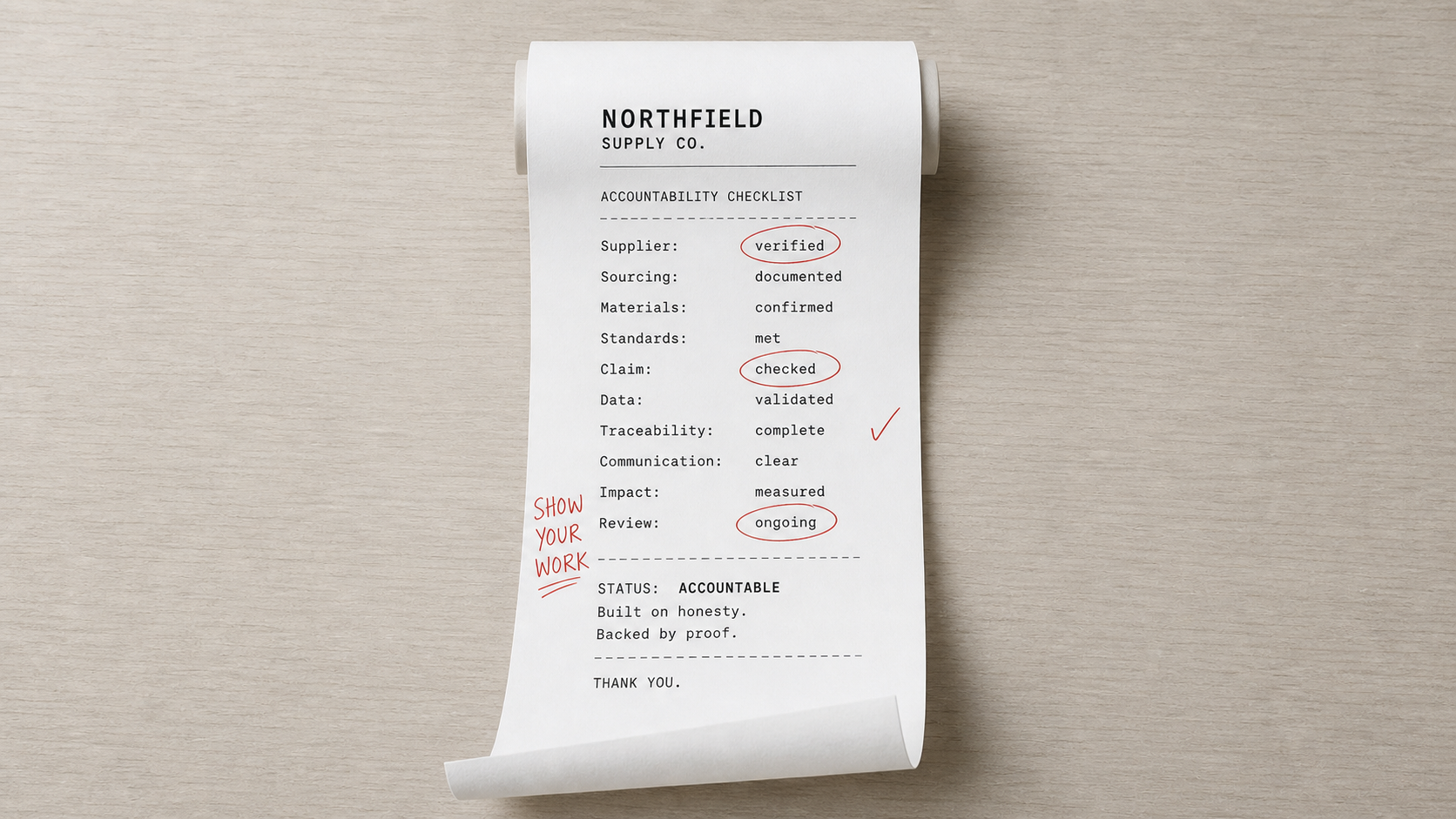
As consumers demand more proof behind brand claims, transparency and hard evidence are replacing marketing polish.
"Show your work" used to be a phrase from math class, the thing your teacher wrote in red pen when the final answer was right but you'd skipped the steps.
It's making a comeback because AI can produce a clean, correct-looking essay with zero understanding behind it, and teachers are slowly giving up on grading the finished paper alone. Some ask students to share the version history of a Google Doc so they can watch an essay take shape over two weeks instead of appearing fully formed at 11 p.m. the night it's due. Others have revived the oral defense: explain your argument and answer questions on the spot. As one educator put it, you can't detect your way out of AI. You can only design your way out, by grading the process instead of the artifact.
That same shift is showing up outside the classroom, too. Think about the claims you see as a consumer every day, whether on a shampoo bottle, a software pricing page or a granola box:
Clean. Natural. Handcrafted. Sustainable. Eco-friendly. Doctor-recommended. Hypoallergenic. Clinically proven. Bank-level security. Military-grade material. No hidden fees. Exclusive. Best-in-class.
Brands stack these claims on labels, boxes and homepages, yet consumers are increasingly skeptical—and with good reason.
Many of these words have little or no legal definition. "Hypoallergenic" effectively means whatever a marketer wants it to mean after a federal court struck down the FDA's attempt to define it. The FTC has likewise declined to define "sustainable" because there's no accepted standard. Even claims like "secure" are generally challenged only after harm occurs. In practice, companies can make remarkably broad claims before they're ever asked to prove them.
From Buzzwords to Blueprints
Customers are starting to expect something different. They don't just want the claim. They want to see the work behind it.
NourishUs Naturals, a naturally derived hair and skin care manufacturer, offers a good example. In its guidance on "Made in USA" claims, the manufacturer explains that the phrase is a claim that should be backed by evidence. Rather than encouraging brands to reach for the broadest possible wording, it outlines the specific documentation needed to support the claim and recommends more precise alternatives when those are more accurate.The manufacturer’s argument is that the most compelling marketing claim is the one a company can prove, not the boldest one.
ALPLA, a $6 billion global packaging manufacturer with more than 200 plants worldwide, has taken a similar approach to sustainability. The company commissioned an independent life-cycle assessment covering 59 packaging material combinations and published the methodology and results for customers to examine themselves. Rather than simply asking customers to accept its environmental claims, ALPLA made the underlying evidence available so customers could evaluate it on their own. That's the difference between making a claim and making it verifiable.
Research suggests consumers are rewarding that kind of transparency. A recent Nutritics study of allergy-affected diners found that 95% have decided against eating at a restaurant because they couldn't find clear allergen information in advance. More than seven in 10 said they would dine out more often if that information were easier to access. The strongest trust signal was something simple: allergens clearly identified on every menu item — not a slogan or certification. When the stakes are high, consumers increasingly prefer detailed documentation over blanket assurances.
Proof Beyond the Label
The pattern extends well beyond business, which suggests this is a broader shift in how people decide what's credible. Charity: water figured this out two decades ago. Instead of simply telling donors their money funded clean water projects, the nonprofit began GPS-tagging every well it built and publishing photos so donors can find the exact well they helped fund. Thousands of those wells now include sensors that report whether they're still functioning years later. It's a process that's still visible to this day.
None of this is foolproof. A cost breakdown can leave out inconvenient expenses, a sourcing story can be selective, and even showing your work doesn't guarantee the work was done well. But documenting a process is still harder—and more expensive—to fake than printing an adjective on a label. More importantly, it gives people something to examine. They can follow the evidence, verify the numbers, and question how the conclusions were reached.
So here's the question every business should ask this quarter.
Take the claim your company leans on most—whether it's about pricing, sustainability, quality or security—and ask whether you could walk a customer through the evidence behind it. Could you point to the supplier? Explain the methodology? Share the numbers? If you can, you're sitting on a far more valuable marketing asset than the claim itself.
If you can't, that's not necessarily a reason to panic. But it is something to put near the top of your to-do list.

 3 min read