
 10 min read



For the better part of a decade, the dominant logic in marketing and communications went something like this: paid media is predictable, scalable, and measurable — so when you need results, you buy them. Earned media is harder to control, harder to measure, and frankly, a little bit of a gamble. Most budget committees, given the choice, gravitated toward the sure thing.
That logic is now being turned on its head. And the force doing the turning isn't a new PR philosophy or a charismatic industry guru. It's AI.
Gartner's Top Predictions to Inform 2026 Comms Strategies makes a striking call: by 2027, mass adoption of public large language models as a replacement for traditional search will drive a 2x increase in PR and earned media budgets. That's not a modest adjustment — it's a doubling. Within two years. For a budget category that many organizations have been quietly trimming for most of the past decade.
To understand why, you have to look at what AI search engines actually read, trust, and cite. Muck Rack's Generative Pulse December 2025 report — based on analysis of more than one million links cited by AI responses across four major models — gives us the clearest picture yet of exactly that.
What Is the Muck Rack Generative Pulse Report?
The Muck Rack Generative Pulse report (December 2025) studied how AI models — specifically Claude, ChatGPT, Gemini, and Perplexity — cite sources when responding to realistic user queries across industries including finance, healthcare, technology, hospitality, energy, and more. The researchers ran a diverse set of prompts through these systems between July and December 2025 and catalogued over one million cited links.
The headline finding is stark: roughly 94% of all links cited by AI are non-paid media. Journalism accounts for nearly a quarter of all citations (24.7%), third-party corporate and blog content for another 24.5%, and aggregators and encyclopedic sources like Wikipedia for around 14%. Press releases, academic research, and government or NGO content make up most of the rest.
Paid placements, sponsored content, and advertising? They barely register.
What Does Gartner's 2026 Communications Predictions Report Say?
Gartner's Top Predictions to Inform 2026 Comms Strategies outlines five major predictions for chief communications officers (CCOs) through 2029. Prediction 1 is the one most directly relevant to PR and marketing leaders right now:
"By 2027, mass adoption of public LLMs as a replacement for traditional search will drive a 2x increase in PR and earned media budgets."
Gartner's research backs this up with behavioral data. AI-powered chatbots experienced explosive growth between the first half of 2024 and the first half of 2025 — ChatGPT traffic grew 608% year over year, while Perplexity grew 262%. Traditional search engines Google and Bing, meanwhile, saw slight declines. Gartner's analysis also found that more than 95% of links cited by AI answer engines are nonpaid mentions and coverage, with 27% originating directly from earned media.
The two reports, taken together, make a compelling and consistent case: the channel people use to find information is shifting, and the strategies for being found in that channel look very different from traditional paid media playbooks.

The Recency Problem — and the Opportunity
One of the most actionable findings in the Muck Rack Generative Pulse report is how heavily AI models favor fresh content.
More than half of all citations in the study were from content published within the last twelve months. But the concentration gets even more pronounced when you zoom in. For both Claude and ChatGPT, around 4% of all citations came from content published within the previous seven days — which makes the first week after a story goes live the single highest-density citation window of any time period measured.
Gartner's research reinforces this finding from the query side. When AI searches imply recency — queries like "what is XYZ company's most recent stance on sustainability?" — almost half of all citations are news coverage. A company that has gone quiet for several months is effectively invisible to AI the moment a user asks about its current position on anything.
This creates both urgency and real opportunity. PR teams can no longer treat media relations as a campaign activity with quiet periods in between. Consistent, steady earned coverage — even in smaller doses spread across the year — accumulates AI citation weight in a way that periodic big-push campaigns simply don't.
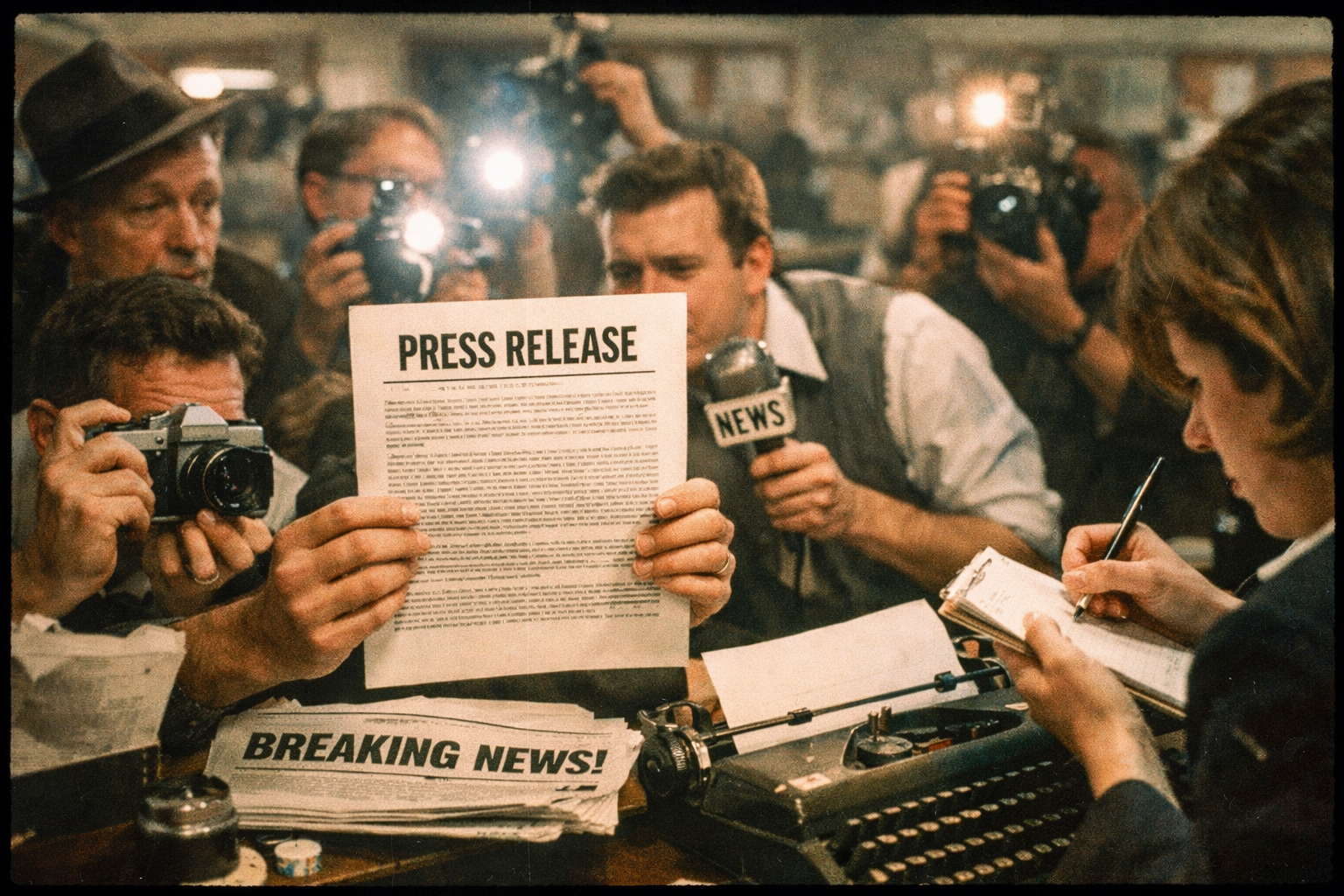
Press Releases Are Making a Surprising Comeback
One of the more counterintuitive findings in the Generative Pulse report involves press releases. Between July and December 2025, citations to press release wire services including PR Newswire, Business Wire, and GlobeNewswire increased fivefold — from 0.2% of all AI citations in July to 1% by December. Broader press release citations across all platforms rose from roughly 1.2% to around 6% of total citations over the same period.
The report also identified what separates cited press releases from ignored ones. The differences are substantial:
- Cited press releases contain about 2x as many statistics as non-cited ones
- They use 30% more action verbs
- They have 2.5x as many bullet points
- They mention more unique companies and products
- They have a 30% higher rate of objective, factual sentences
The pattern is unmistakable: AI models are drawn to structured, data-rich, factually grounded content. A press release that reads like a genuine news document — with specific numbers, clear actions, and minimal marketing language — stands a significantly better chance of being picked up and cited.
The 2% Problem That Should Be Keeping PR Directors Up at Night
Perhaps the most jarring data point in the entire Generative Pulse report is this: when researchers compared the journalists most frequently pitched by brands with the journalists whose work is most frequently cited by AI engines, the overlap was just 2%.
Two percent.
That means the media relationships that most PR teams have spent years cultivating are largely disconnected from the journalists whose work actually shapes what AI tells people about the world. This doesn't mean those relationships are worthless — journalists at major publications write for human readers too, and human audiences still matter. But it does mean that a PR strategy built entirely around traditional media targets, without any awareness of which outlets feed the AI citation graph, is operating with a significant blind spot.
The Generative Pulse data shows that AI models are highly selective — and often idiosyncratic — about which outlets they prefer. Claude's top-cited outlets include U.S. News and World Report, Nature, Yahoo Finance, CNBC, NerdWallet, and Bankrate. ChatGPT leans toward Reuters, The Verge, The Guardian, Financial Times, CNBC, and Axios. Gemini has distinct preferences of its own — Forbes, Investopedia, NerdWallet, Cnet, Bankrate, and PC Magazine — while also showing a notable appetite for YouTube content in certain categories. The overlap across models is minimal, with only CNBC and Bankrate appearing consistently across multiple platforms.
Industry context matters just as much. Healthcare queries surface NIH, PubMed, and the FDA. Energy queries pull energy.gov and the IEA. Finance queries favor Bankrate, NerdWallet, and Investopedia. Each industry has its own citation ecosystem, and coverage in the right niche outlet can outperform a major national paper for industry-specific AI visibility.

What This Means for PR and Marketing Budgets
The Gartner 2x prediction isn't a number pulled from thin air. Their research shows that CCOs were already leaning in this direction heading into 2025 — 36% anticipated increases to PR and earned media budgets, the highest of any budget category tracked. The prediction is that awareness will translate into action at scale over the next two years, driven by the reality that AI answer engines don't respond to paid media the way search engines do. You can't buy your way to the top of an AI response. You have to earn it.
Gartner also flags a measurement challenge that runs alongside this shift. Communications functions currently allocate just 2.9% of their budgets to data and analytics, compared to 8% in marketing. As earned media becomes more strategically critical, the ability to track its impact on AI visibility becomes correspondingly more important. Gartner's fifth prediction calls for communications data and analytics spending to double to 6% of function budgets by 2029.
Practical Takeaways for PR and Marketing Teams
Both reports point toward the same set of conclusions for teams thinking about how to adapt:
Prioritize volume and recency of earned coverage. A brand generating consistent, factual, data-rich coverage throughout the year will accumulate more AI citation weight than one doing two big media pushes and going quiet in between.
Rethink your outlet targeting strategy. Traditional media tiering based on circulation and prestige doesn't map cleanly onto AI citation patterns. Understanding which outlets feed which models, for which types of queries, is becoming a distinct strategic competency.
Invest in press releases designed for AI, not just humans. The fivefold increase in press release citations in six months reflects something real about how AI models evaluate structured, factual content. Lead with data, use bullet points, drop the superlatives.
Close the 2% gap. Build an explicit understanding of which journalists and outlets are influencing AI answers in your category, and build those relationships alongside the traditional ones.
Start measuring AI search visibility now. You can't optimize what you don't track. Benchmarking how your brand surfaces in AI answer engines — and which sources are driving or blocking that visibility — should be on every communications team's 2026 measurement agenda.
Frequently Asked Questions
What does Gartner predict about PR budgets? Gartner's Top Predictions to Inform 2026 Comms Strategies forecasts that by 2027, mass adoption of public LLMs as a replacement for traditional search will drive a 2x increase in PR and earned media budgets. The prediction is based on the rapid growth of AI chatbot usage (ChatGPT traffic grew 608% YoY between 1H 2024 and 1H 2025) and the fact that AI answer engines overwhelmingly cite non-paid, earned media content.
What is the Muck Rack Generative Pulse report? The Muck Rack Generative Pulse report (December 2025) is a study of how AI models including ChatGPT, Claude, Gemini, and Perplexity cite sources in their responses. Based on analysis of over one million cited links, it examines which types of media AI favors, which outlets get cited most often, and what factors determine whether a piece of content gets picked up by AI search engines.
What percentage of AI citations come from earned media? According to the Muck Rack Generative Pulse report, approximately 94% of all links cited by AI are non-paid media, with journalism alone accounting for nearly 25% of all citations. Gartner's research similarly found that more than 95% of AI-cited links are nonpaid, with 27% coming directly from earned media.
What makes a press release more likely to be cited by AI? The Generative Pulse report found that cited press releases contain roughly twice as many statistics, 30% more action verbs, and 2.5x as many bullet points compared to non-cited press releases. They also feature more objective, factual sentences and reference more unique companies and products. In short: data-dense, structured, factual content significantly outperforms marketing-heavy copy.
How much does recency matter for AI citations? Significantly. The Generative Pulse data shows that the first seven days after publication represent the highest citation density of any time window — around 4% of all citations for both Claude and ChatGPT come from content published within the previous week. More than half of all citations are from content published within the last twelve months.
What is Generative Engine Optimization (GEO)? Generative Engine Optimization (GEO) refers to the practice of optimizing content and media strategy to improve a brand's visibility in AI-generated search results, as distinct from traditional SEO which targets keyword rankings in conventional search engines. As AI models become a primary way people find information, GEO is emerging as a critical discipline for PR and communications teams.

 1 min read